

March 14, 1989
Transit memories are said to create much of our pain and instability, because they insert subconscious doubt into our life experiences. For example, when someone we are in relationship with says “I love you.” we may accept this statement on the surface. But if we are uncertain of the truth of the declaration subconsciously, we are dealing with transit memories instead of reality in the moment. These transit memories come from our early experiences and traumas that get hardened over time and reflect our fundamental insecurity, our long-held ideas about our lack of fundamental worthiness, loveability, and aptitude.
When we are mired in transit memories, we can’t fully acknowledge our achievements, talents, and unique characteristics; they cause us to operate from a wobbly foundation of latent self-doubt, and this prevents us from engaging completely with life and acting with our full Selves. If we say that we have successful careers, but inwardly doubt this, the polarity between the two saps our energy and weakens our nervous systems, because we are not completely sure of what we pronounce. We know and we don’t know, and being suspended between the two draws a lot of energy that we cannot put toward what we want and need to do in life.
The holy trinity can be thought of as totality, reality, and personality. When we find reality, we have to experience totality, and when we find totality our personality must experience reality. Use this kriya to clear transit memories, so you can know reality, without doubt, and all that comes with it.
Tapping the chest with the open palms, which is done frequently in this set, is said to relax the inner self that is suspended between our truth and subconscious doubt. After practicing this kriya, it is suggested that you drink a lot of water to flush your system, so much that you have to get up at night to urinate.
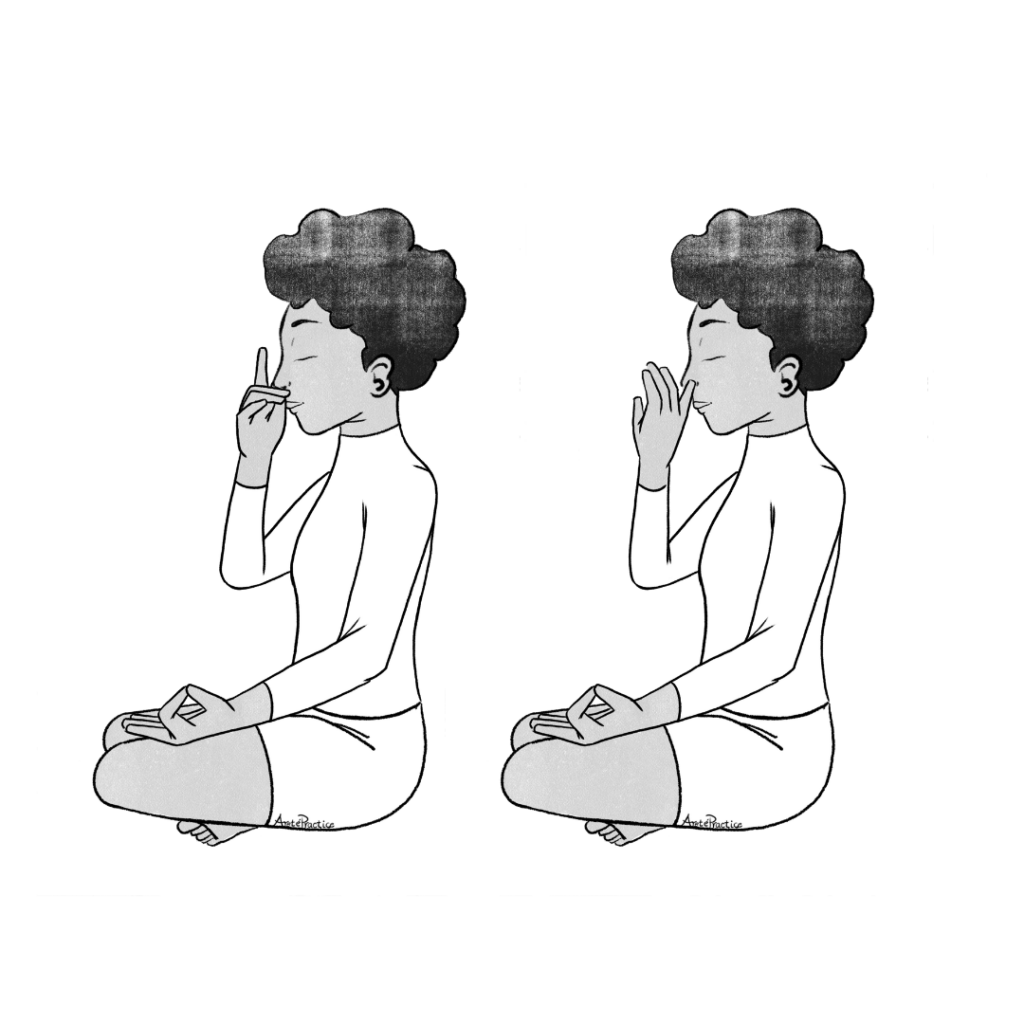
1. Alternate Nostril Breathing
Posture & Mudra: Sit in Easy Pose (Sukhasana).
Movement & Breath: Inhale through your right nostril and exhale through your left nostril. Breathe deeply at a pace of 1-2 cycles per second.
Duration: Continue for 2 minutes.
Ending: Immediately begin Exercise 2.