Clearing The Subconscious Reverse Personality
November 14, 1989
In western psychology, the shadow is composed of the parts of ourselves that we don’t have conscious access to or have disowned, avoided, or shut down. These parts come from the behaviors that were not welcomed or perhaps even punished by those around us when we were young children. For example, when I was a child, and I expressed anger (or threw a tantrum), I was punished and sent to my room. As an adult I may not allow myself to express, or even feel, angry. In the Kundalini tradition these parts are called the Hidden Self and sometimes the Reactive Self. When these parts are cemented or dug-in over time, the resulting personality is called the Mask or the Subconscious Reverse Personality.
“Everyone carries a shadow, and the less it is embodied in the individual’s conscious life, the blacker and denser it is. If an inferiority is conscious, one always has a chance to correct it… But if it is repressed and isolated from consciousness, it never gets corrected, and is liable to burst forth suddenly in a moment of unawareness. At all counts, it forms an unconscious snag, thwarting our most well-meant intentions.” – Carl Jung, C.W. Vol. 11: Psychology and Religion: West and East
In seeking to avoid or control these parts of ourselves that we judge undesirable, we push them underground or into the subconscious. What lives in the subconscious can begin to take on a life of its own, outside of our control, precisely because we are not conscious of it. These parts often try to get their unfulfilled needs met with a Hidden Agenda, which leads us to speak and act in ways that can shock us. It can become entrenched and begin to take over our lives, becoming a Subconscious Reverse Personality that acts against our interests. For example: If I didn’t experience acceptance as a child, my Hidden Self might make a Hidden Agenda to meet this previously unmet need. To do that, it creates an imaginary personality that it thinks will get it the acceptance it needs. This Reverse Personality may do things that are not really in my best interests or that don’t reflect who I really am, in order to meet its need for acceptance, and they may operate outside of my control.
Journaling/Reflection Question:
Do you have an experience of this that you can recall? When have you done or said something that you didn’t mean to? A moment when your actions or communication seemingly came out of nowhere and shocked you or created unwanted consequences?
This kriya is said to bring the subconscious up, so we can access it with the conscious mind, process it, and integrate the Hidden Self. This can help us to dissolve the Subconscious Reverse Personality, so we can be more authentic, whole, and make more conscious choices in our lives. It is recommended to drink water with lemon or other citrus juice to help recover after practicing this kriya.
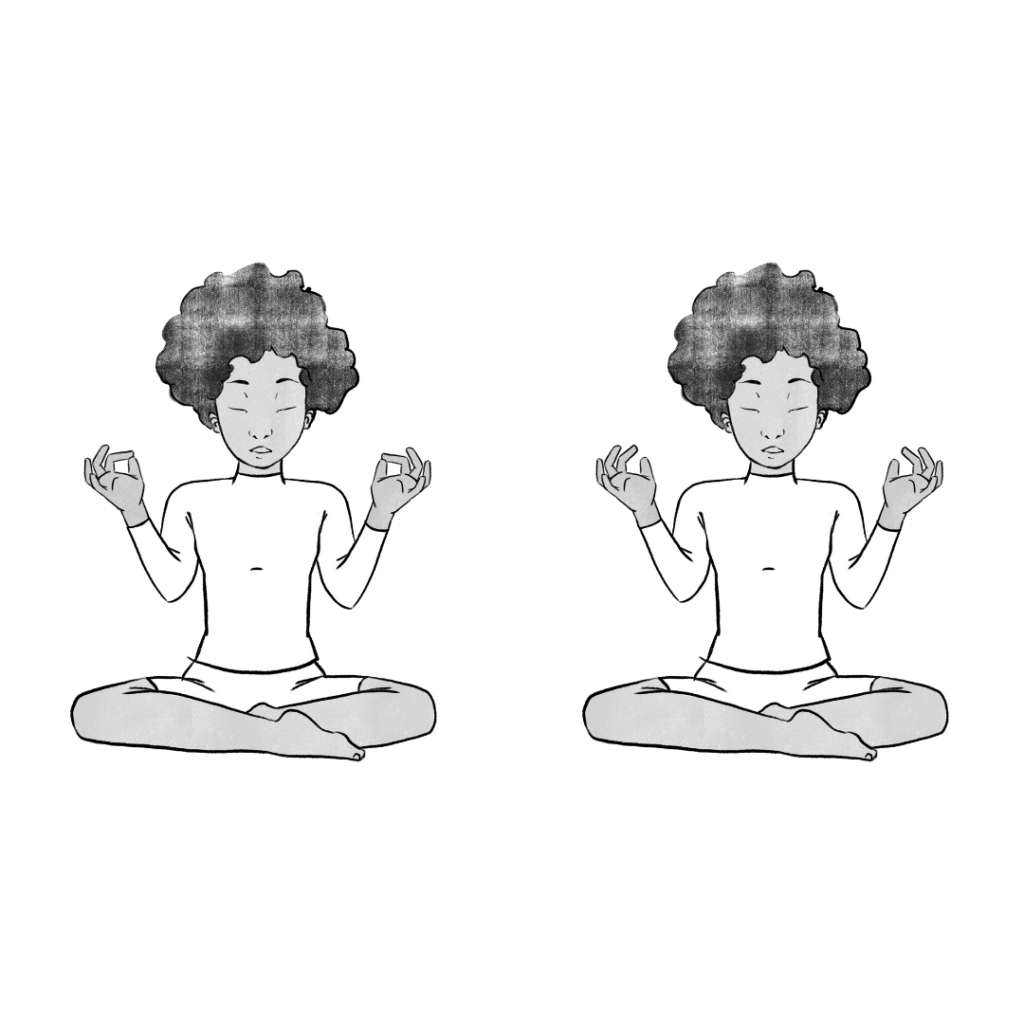
1. Finger Touch with Sounds
Posture & Mudra: Sit in Easy Pose (Sukhasana) and bring your hands in front of your shoulders with the palms facing each other.
Movement & Breath:
- Rapidly touch the tips of the thumb and the index finger together. Move as quickly as you possibly can for 4 minutes.
- Continue to touch the fingertips rapidly as you make the following sounds:
- Whistle your national anthem for 1 minute.
- Whistle your own personal love call for 1 minute.
- Make any bird call for 1 minute.
- Make the sound of any animal of your choice for 1 minute.
- Make the sound “hup” with your lips. Move quickly for 1 minute.
- Hiss like a snake for 3 minutes.
- Cluck your tongue on the back of the roof of your mouth for 1 minute.
Duration: Continue for 13 minutes total.
Ending: Immediately begin Exercise 2.
2. O Breath
Posture & Mudra: Sit in Easy Pose (Sukhasana) and place your hands on your Heart Center (Anahata Chakra), one on top of the other.
Movement & Breath: Inhale quickly through an O shaped mouth and then exhale powerfully through the O shaped mouth.
Duration: Continue for 1 minute.
Ending: Immediately begin Exercise 3.
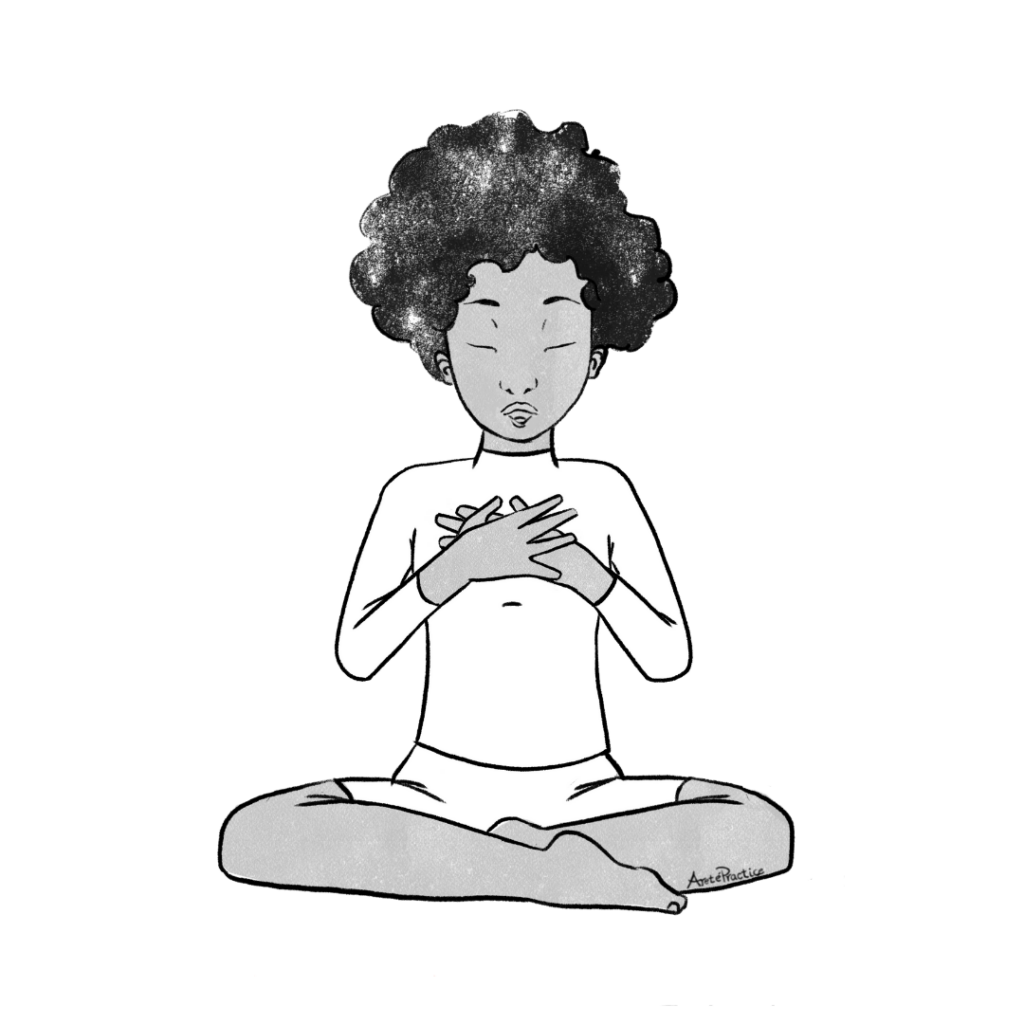
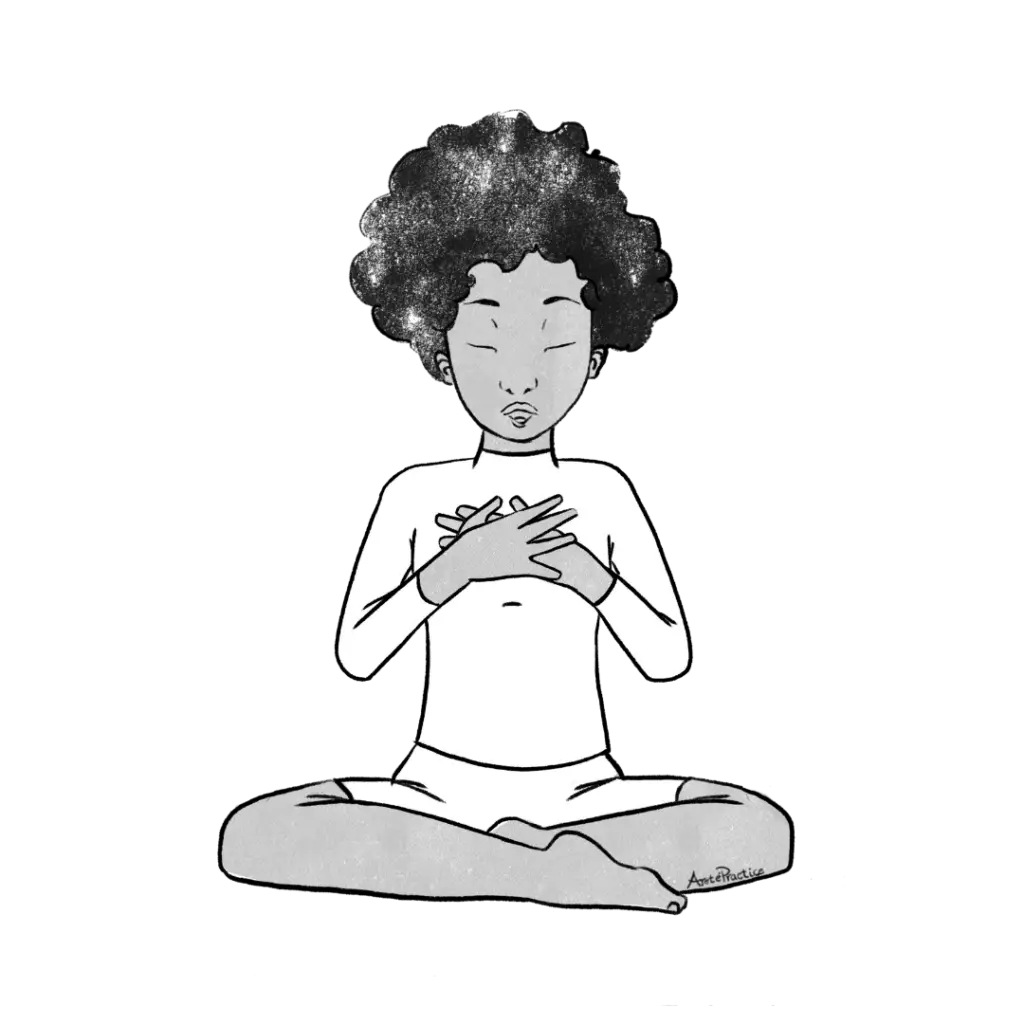
3. Heart Meditation
Posture & Mudra: Sit in Easy Pose (Sukhasana) and place your hands on your Heart Center (Anahata Chakra), one on top of the other.
Mantra: Listen to or sing along with a recording of the Pavan Guru mantra.
“PAVAN PAVAN PAVAN PAVAN
PAR PARA PAVAN GURU
PAVAN GURU WAHE GURU
WAHE GURU PAVAN GURU“
Suggested Recording: Pavan Pavan by Guru Shabad Singh Khalsa from The Legacy Collection.
Eyes/Drishti: Closed.
Mindful Attention: Meditate deeply and feel the beat of your heart. Bring in pranic energy, become one with your heart, and bless it.
Duration: Continue for 4 ½ minutes.
Ending: Immediately begin Exercise 4.
4. Breath Meditation
Posture & Mudra: Sit in Easy Pose (Sukhasana) and place your hands on your Heart Center (Anahata Chakra), one on top of the other.
Mantra: Listen to the gong.
Suggested Recording: Gong Bath by Christine Lopez from the album Vibrate the Cosmos.
Mindful Attention & Breath: Breathe long, slowly, and deeply and meditate on your breath. Become so light that gravity cannot hold you down; float up.
Eyes/Drishti: Closed.
Duration: Continue for 12 ½ minutes.
Ending:
- Breathe Cannon Breath rapidly for 30 seconds.
- Inhale deeply and suspend your breath for 20 seconds. As you hold, shrug your shoulders up and down. Cannon Fire exhale.
- Repeat this sequence 2 more times.
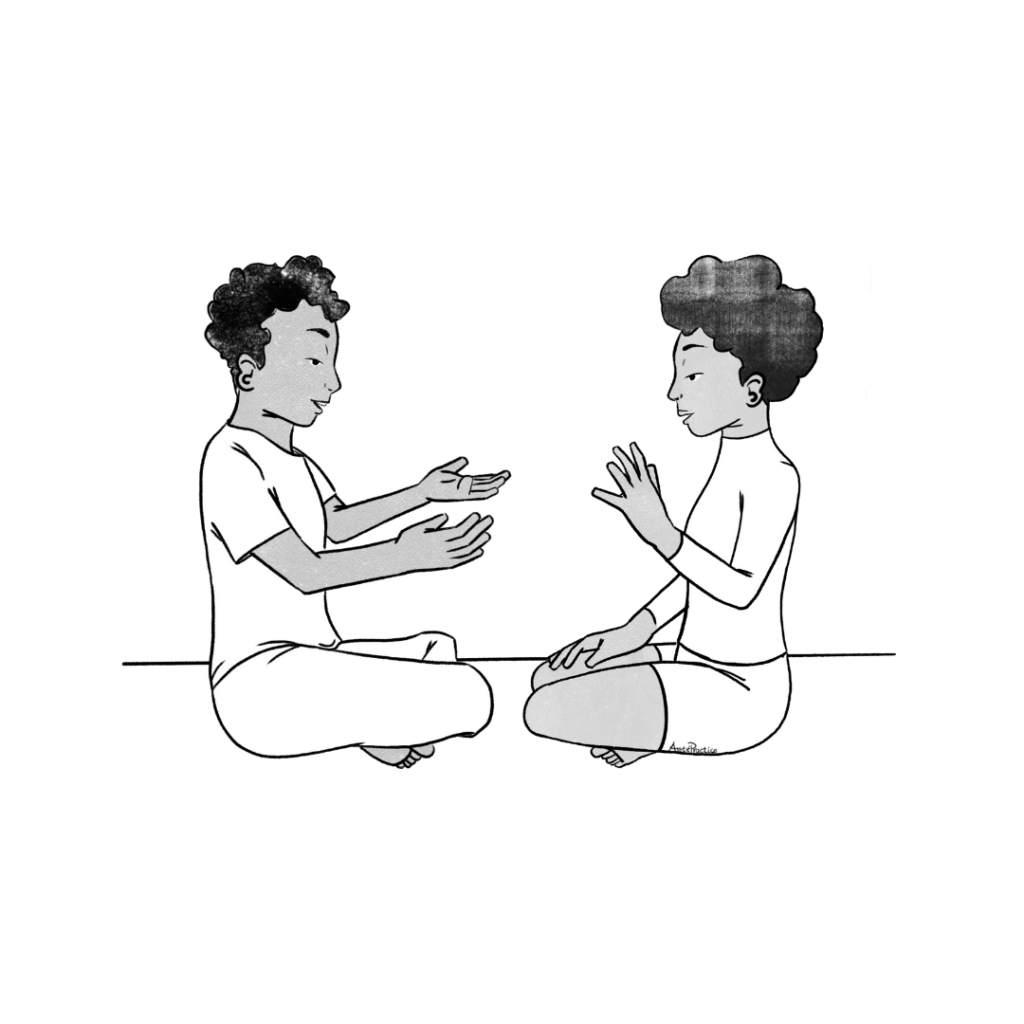
5. Relax & Talk
Posture & Mudra: Sit in any comfortable posture.
Mindful Attention: Relax and talk to someone. If you are practicing alone, talk to yourself aloud.
Duration: Continue for 3 ½ minutes.
6. Loud Laugh
Posture & Mudra: Sit in Easy Pose (Sukhasana).
Movement & Breath: Open your mouth wide and laugh as loud as you possibly can.
Duration: Continue for 1 minute.